Every dollar you can legitimately claim as a deduction is a dollar you don't pay tax on. Every dollar you claim that you shouldn't is a risk if the ATO comes knocking. For tradies running their own business, the difference often comes down to two things: knowing the rules, and keeping the records to back up your claims.
This guide explains the main tax deductions for sole traders and small trade businesses in Australia: your vehicle, tools and equipment, workwear, phone, home office, insurance, super and more. It's current for the 2026–27 income year, as at November 2026. It's general information, so check your own situation with a registered tax agent.
The basic rules
The ATO's business deductions page says you can generally claim a deduction for expenses you incur in carrying on your business if they're directly related to earning your assessable income. Three rules apply to almost everything:
- It must be for the business. Private and domestic expenses aren't deductible.
- If it's partly private, claim only the business part. You need a fair and reasonable way to work out the split, and records to show how you did it.
- You need records. Keep receipts and tax invoices, generally for 5 years.
If you're registered for GST, you claim the GST on purchases as a credit on your BAS, and the deduction is the amount excluding GST. Our guide to BAS for sole traders explains GST credits.
Key deduction rules and limits for 2026–27
The $20,000 instant asset write-off is now permanent for small businesses, and the cents per kilometre rate is 91 cents for 2026–27.
| Rule | 2026–27 | Source |
|---|---|---|
| Instant asset write-off | Assets costing less than $20,000 each, for businesses with aggregated turnover under $10 million. Permanent from 1 July 2026 | ATO, $20,000 instant asset write-off (made permanent from 1 July 2026) |
| Cents per kilometre (cars only) | 91 cents per business kilometre, up to 5,000 km per car | ATO, Cents per kilometre method |
| Car limit for depreciation | $69,883 for cars first used or leased in 2026–27 | ATO, Car thresholds from 1 July (2026–27) |
| Utes carrying one tonne or more | Not a car for tax: claim the business portion of actual costs, with records | ATO, Small business guide: motor vehicle expenses |
| Personal super contributions | Deductible within the $32,500 concessional cap, if you give your fund a notice of intent first | ATO, Contributions caps |
| Keeping records | Most records for 5 years | ATO, Overview of record-keeping rules for business |
Your ute, van or car
For most tradies, the vehicle is the biggest deduction, and the rules depend on what kind of vehicle it is.
Utes and vans that carry one tonne or more
The ATO's small business guide to motor vehicle expenses says a "car" is a vehicle designed to carry a load of less than one tonne and fewer than 9 passengers. Utes and panel vans designed to carry one tonne or more aren't cars for tax purposes, so the cents per kilometre and logbook methods don't apply. Instead, you claim the business portion of your actual costs: fuel, rego, insurance, servicing, repairs, tyres, interest and depreciation. You still need records showing how you worked out the business percentage. A logbook is the easiest way.
Many four-wheel drives and some dual-cab utes are classed as cars, so check the manufacturer's specifications for the payload.
Cars
For a car, a sole trader can use either:
- the cents per kilometre method: 91 cents per business kilometre for 2026–27, up to 5,000 km per car, according to the ATO's cents per kilometre page. The rate covers all running costs including depreciation, and you need to be able to show how you worked out your kilometres; or
- the logbook method: keep a logbook for a continuous 12-week period and claim the business-use percentage of all your car expenses.
ATO cents per kilometre rate for car expenses, 2020–21 to 2026–27
The rate has risen from 72 cents in 2020–21 to 91 cents in 2026–27.
Show the figures as a table
| Income year | Cents per kilometre |
|---|---|
| 2020–21 and 2021–22 | 72c |
| 2022–23 | 78c |
| 2023–24 | 85c |
| 2024–25 and 2025–26 | 88c |
| 2026–27 | 91c |
If you buy an expensive car, depreciation is capped at the car limit, which the ATO says is $69,883 for 2026–27. The car limit doesn't apply to utes designed to carry one tonne or more.
Travel between home and a regular workplace is usually private. The rules are different if your home is your business base or you travel between job sites, so ask your tax agent how they apply to you.
Tools and equipment
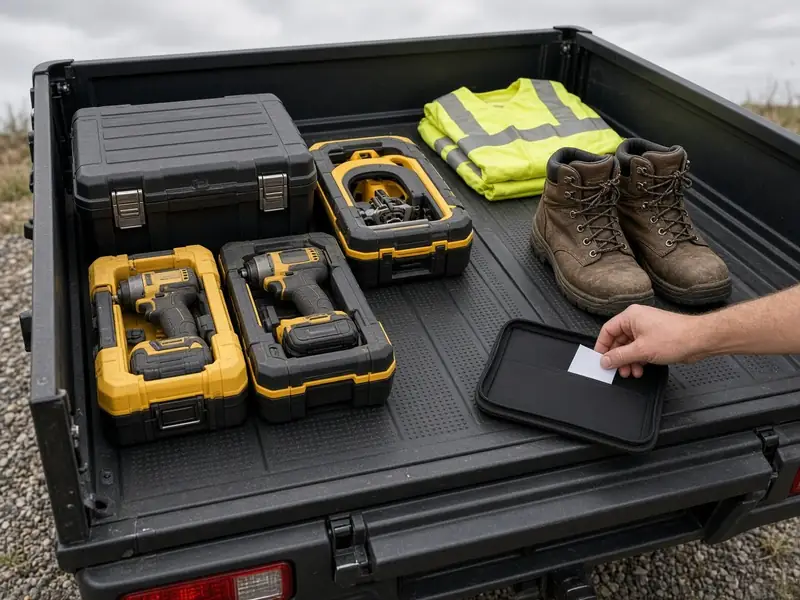
Tools, equipment and machinery you use in the business are deductible, either straight away or over several years.
The big news for 2026–27 is that the $20,000 instant asset write-off is now permanent. The ATO's instant asset write-off page says that from 1 July 2026, small businesses with aggregated turnover under $10 million can deduct the full cost of eligible assets costing less than $20,000 in the year they're first used or installed ready for use. The limit applies per asset, so you can write off several. Assets costing $20,000 or more go into the small business pool, depreciated at 15% in the first year and 30% after that. The ATO says pool balances under $20,000 at the end of the income year can also be written off. The ATO notes the change was made law by the Treasury Laws Amendment (Tax Reform No. 2) Act 2026. Talk to your tax agent before you buy: a big purchase just before 30 June only makes sense if the business actually needs it.
Only the business-use portion counts. A $20,000 limit doesn't help with a $45,000 ute, even if you only use 40% of it for business: the ATO looks at the asset's full cost.
Workwear and safety gear
The ATO's guide for tradies says protective clothing and equipment that protects you from specific risks at work is deductible, such as hi-vis, steel-capped boots, safety glasses, helmets, earmuffs, and sunscreen, sunhats and sunglasses if you work outdoors. Branded uniforms can also qualify. Everyday clothes, like plain jeans and t-shirts, generally aren't deductible, even if you only wear them to work.
Phone, internet and software
Claim the business portion of your phone and internet costs. If you use one phone for everything, work out a reasonable business percentage, for example from a typical month of calls and data, and keep that record. Business software, such as job management, accounting and quoting apps, is deductible.
Working from home
If you do your quoting, invoicing and paperwork at home, you may be able to claim some running costs. The ATO's page on home-based business expenses describes two methods: the actual cost method, and a fixed rate per hour that covers energy, phone and internet use, stationery and computer consumables. For the fixed rate, you need a record of all the hours you work from home for the whole year. Check the ATO page for the current rate.
If part of your home is set aside as a place of business, such as a workshop, the rules are different and can affect capital gains tax when you sell, so get advice.
Insurance, licences and other costs
Other common deductions for trade businesses include:
- public liability, tools and vehicle insurance premiums,
- licence, registration and permit fees,
- industry association memberships,
- training and tickets that maintain or improve skills for your current business,
- advertising, your website and directory listings,
- bank fees and interest on business loans, and
- your accountant's or tax agent's fees.
Income protection premiums are generally claimed in your personal tax return, not as a business expense, if the policy replaces your income.
Super for yourself
Sole traders don't get super guarantee paid for them, but personal contributions can be deductible. You must give your fund a notice of intent and get an acknowledgment before you lodge your tax return. Concessional contributions, including the ones you claim as a deduction, count towards the cap of $32,500 for 2026–27. Our guide to super for sole traders has more.
What you can't claim
- private expenses, such as family groceries or personal clothes,
- fines and penalties,
- the private-use portion of any shared expense, and
- expenses you've been reimbursed for.
Records make or break your claims
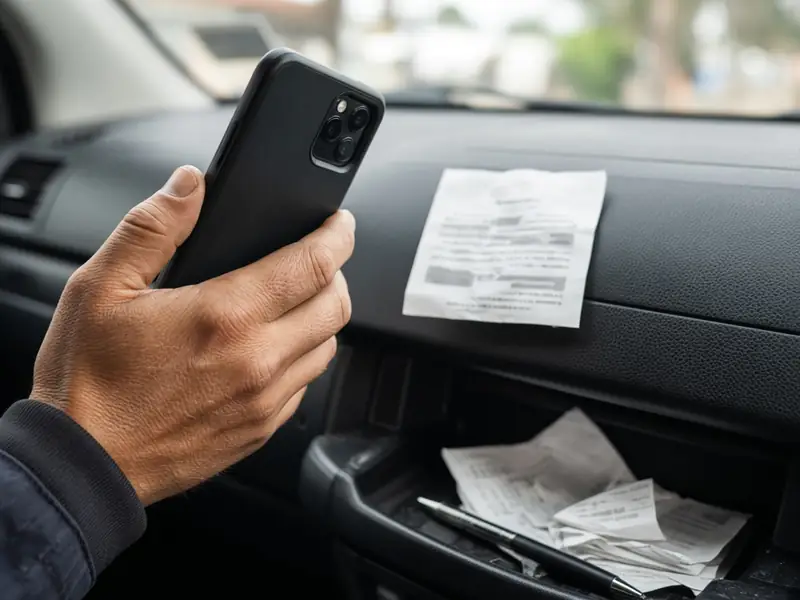
A claim you can't back up with records can be disallowed. Photograph receipts on the day, keep a logbook if you use one, and record how you've worked out any business percentage. The ATO says most records must be kept for 5 years. Our bookkeeping routine shows how to make it a weekly habit.
Tradie Business keeps your quotes, invoices, job costing and payment tracking in one place, so your income records are tidy at tax time. See all features and pricing.
Get advice
A registered tax agent can make sure you claim everything you're entitled to, and nothing you're not. Their fee is deductible too.